1
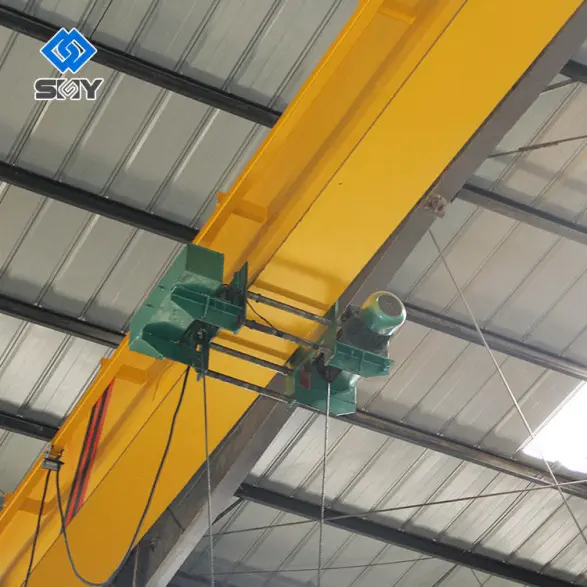
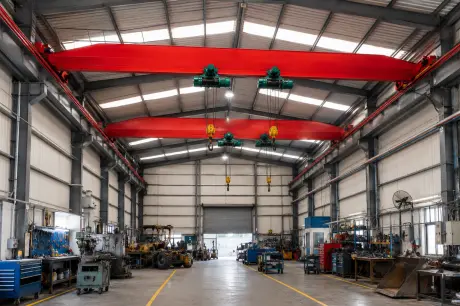
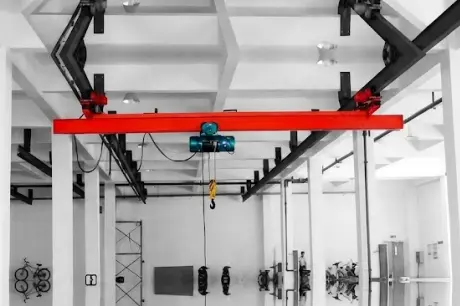
Maximised Hook Height in Restricted Headroom — The electric hoist is positioned beside the main girder, pushing the hook closer to the ceiling and delivering 20–30% more usable lifting height compared to a conventional single girder crane. This often eliminates the need for costly building modifications.
2
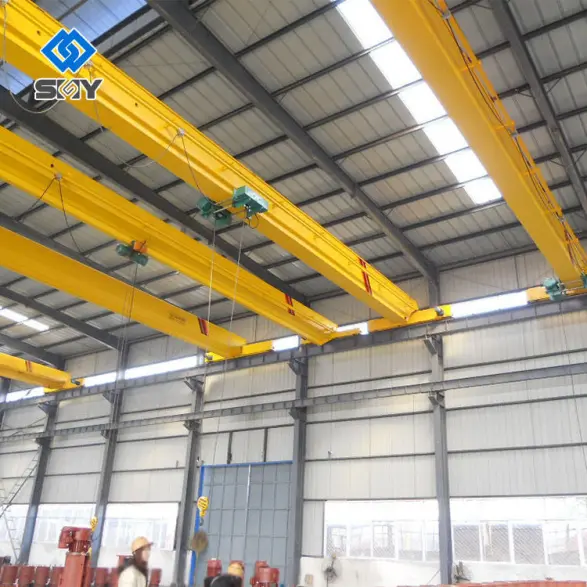
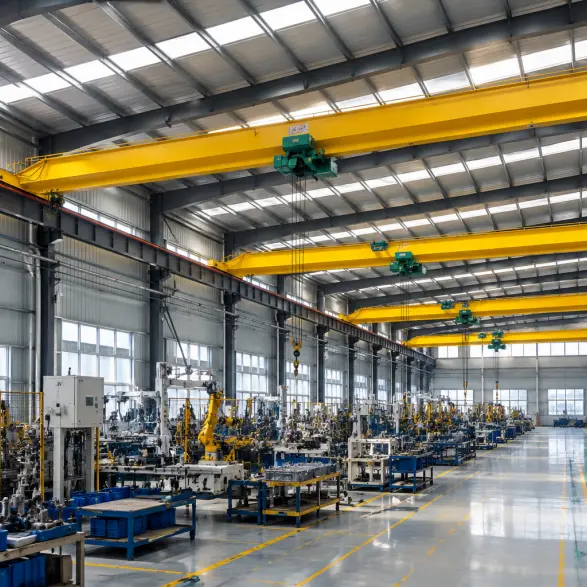
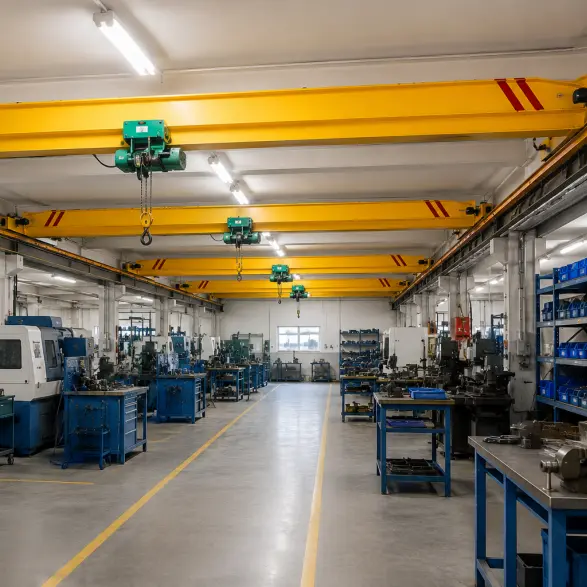
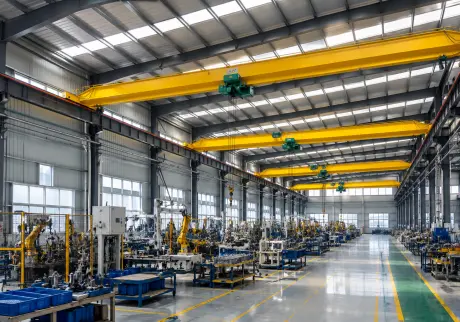
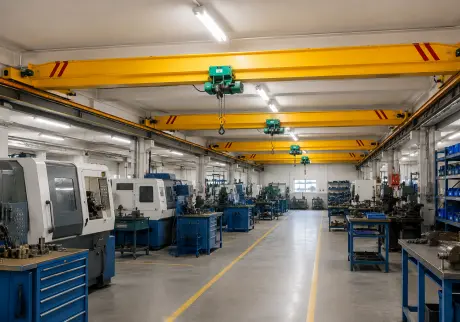
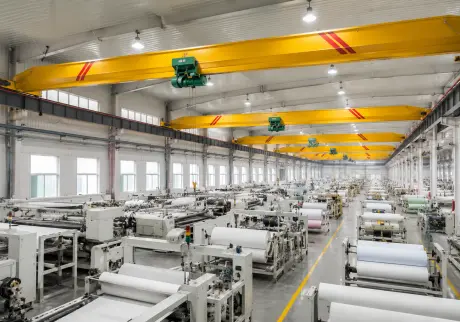
Column-Free Operation via Suspended Installation — The crane runs on the bottom flange of runway beams suspended from the roof, requiring no floor-standing support columns and keeping the entire floor area unobstructed for forklifts, vehicles, and personnel
3
Lightweight, Low Wheel-Load Design — The compact single-girder structure imposes minimal stress on the supporting roof or ceiling structure, making it suitable for existing buildings without heavy reinforcement.
4
Smooth and Precise Load Control — Standard dual-speed hoist (8.0/0.8 m/min) enables efficient vertical movement and fine positioning. Optional variable frequency drive (VFD) on travel motions delivers stepless speed regulation and shock-free starts and stops.
5
Flexible Control Options — Supports pendant control, wireless remote control, and cabin operation to suit different operator preferences and safety requirements.
6
Easy Installation and Low Maintenance — Modular bolt-together construction enables fast installation on existing or new suspended runways. Standardised CD1/MD1 hoists and sealed bearings reduce long-term maintenance workload.